

Beyond Gender: The New Rules of Leadership
Leadership has no gender.
But many of the rules we still use to recognise it do.
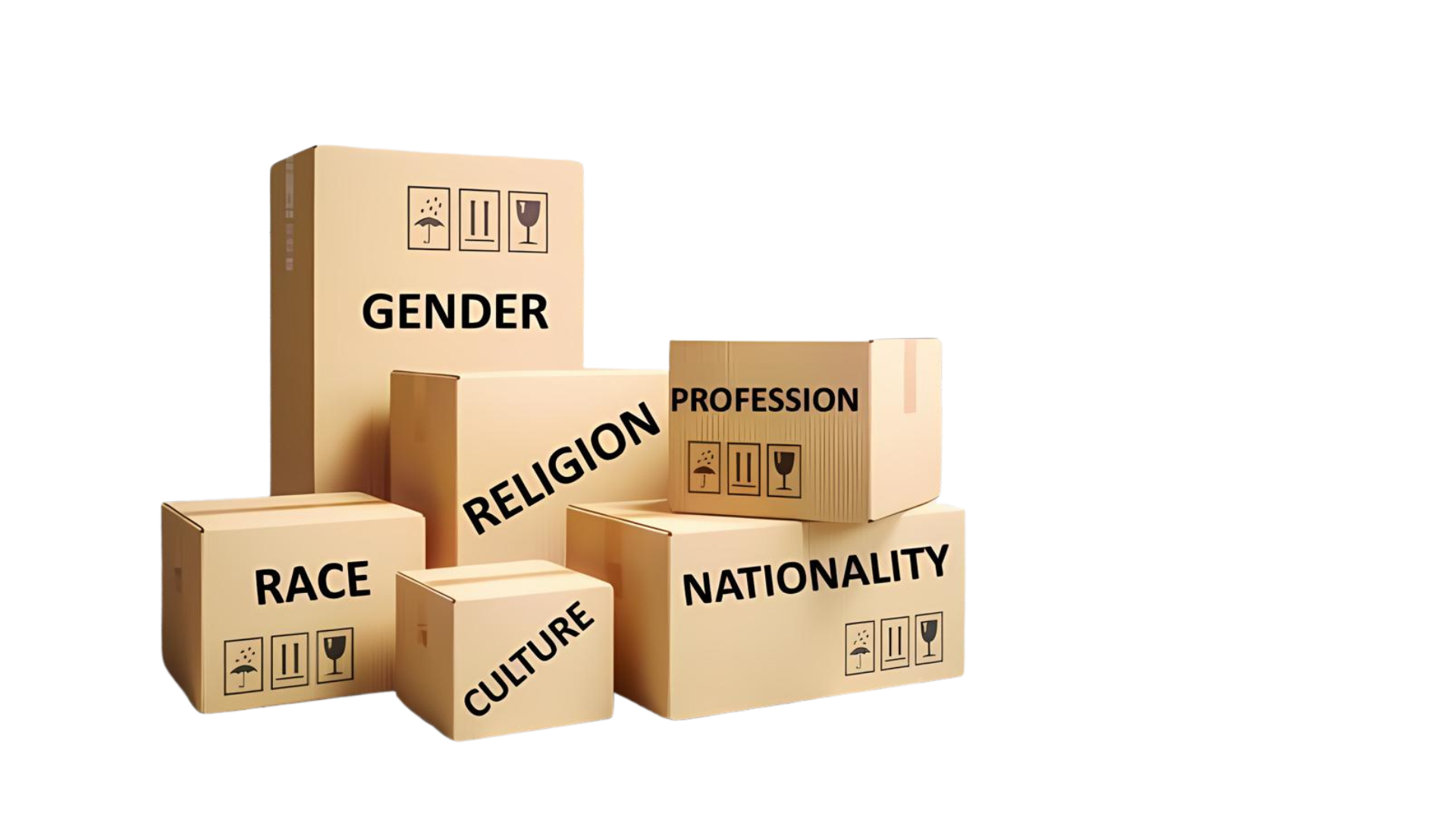
We have spent decades encouraging women to become more confident, visible and decisive.
Women have been encouraged to become more confident, assertive and ambitious.
Men have been encouraged to become more empathetic, collaborative and vulnerable.
All useful human qualities.
But perhaps we have been asking the wrong question.
Instead of asking how women and men need to change to become better leaders, what if we questioned the gendered rules we still use to decide what leadership should look like?
→ Because confidence is not masculine.
→ Empathy is not feminine.
And leadership was never meant to be a performance of gender.
The Leadership Rules We Inherited
Most of us were taught to recognise leadership long before we ever became leaders ourselves.
→ Confidence looked like leadership.
→ Decisiveness signalled strength.
→ Ambition was admired—although not always equally in everyone.
→ Empathy was considered valuable, provided it did not slow down the meeting.
These rules were rarely written down. They did not need to be.
We inherited them.
I have come to think of them as peer pressure from dead people.
We absorbed them from the leaders we saw, the behaviour organisations rewarded and the different words used to describe the same qualities in women and men.
→ One person was confident. Another was difficult.
→ One was decisive. Another was controlling.
→ One was empathetic. Another was too emotional.
Same behaviour. Different box.
We did not create these rules individually. But we may still be following them automatically—when we hire, promote, give feedback or decide who “looks like leadership material.”
And now AI is learning from the language, decisions and examples of leadership we have already created.
That makes this more than a conversation about the past.
Used without awareness, AI can make it easier for us to repeat the old rules—only faster and at scale.
Used intentionally as a reflective partner, it can help us notice the assumptions hiding inside our choices.
So before asking AI who has leadership potential, perhaps we need to ask ourselves:
What have we been taught leadership is supposed to look like—and who might that picture still exclude?
What Does Beyond Gender Mean?
Beyond Gender is a leadership philosophy that challenges the idea that human qualities belong to one gender.
Beyond Gender does not mean that gender no longer matters.
Gender still affects opportunity, safety, pay, visibility and how the same behaviour may be interpreted very differently depending on who displays it.
We should not stop talking about inequality.
But equality will remain limited if we continue dividing human qualities into masculine and feminine categories.
When empathy is described as feminine, we do more than compliment women. We quietly suggest that empathy belongs less naturally to men.
When decisiveness is described as masculine, we do more than recognise men. We make women prove that they possess a quality that was human all along.
We also create a rather impossible leadership performance:
→ Be decisive, but collaborative.
→ Confident, but humble.
→ Empathetic, but never emotional.
→ Vulnerable, but please continue to look completely in control.
Beyond Gender invites us to stop asking whether someone leads like a woman or a man.
A more useful question is:
Can this person recognise what the situation needs—and respond with awareness rather than gendered expectations?
That question matters even more as organisations begin using AI in recruitment, performance reviews and leadership development.
AI can help us examine patterns in language and decisions. But if the criteria we give it are shaped by yesterday’s ideas about what leadership looks like, technology may make those old ideas appear wonderfully modern—and conveniently objective.
The goal is not to remove gender from the conversation.
It is to remove gender from the limits we place on human potential.
What Gendered Leadership Costs Us
For years, I told everyone that I was a terrible baker.
Not merely someone who did not bake very often. A genuinely terrible baker.
I said it so frequently that it became part of my identity—almost as though there might be a surprise baking competition and I needed to manage expectations well in advance.
Then one day, a friend arrived at a gathering once more with one of her beautiful homemade cakes. I noticed how much pleasure it gave her—and everyone else.
And, rather inconveniently, I felt envious.
It made me wonder why I had held on so tightly to the story that I could not bake.
Was it true?
Or had refusing to bake become a small act of rebellion against the traditional box of what a woman was supposed to be?
The irony was that while proving I did not belong in that box, I had denied myself something I actually wanted.
So I learned to bake.
I changed the story. Now I tell everyone:
“You know I always bring cake.”
This may sound like a small story about cake.
It is really a story about permission.
Gendered expectations do not only influence how other people judge us. They can shape what we permit ourselves to develop, express and even enjoy.
→ Some of us learn to fit the box.
→ Others build an identity around refusing to fit it.
Either way, the box may still be running the show.
And perhaps the cost reaches much further than the workplace.
Many people grow up carrying the painful feeling that they are not masculine enough, feminine enough—or somehow the right kind of person at all.
What if some of the distress surrounding gender today is intensified by something deeply human: our need to be allowed to become ourselves fully without every quality, interest or way of being treated as evidence of which gender box we belong in?
What if more people felt free to say:
This is who I am. These are the qualities that belong to me. They do not make me more or less worthy of being recognised as myself.
This does not offer a single explanation for the deeply personal and complex questions people experience around gender and identity.
It does invite us to consider whether the boxes themselves have become far too small for the range of human beings trying to live inside them.
The same cost appears in leadership.
A woman may soften her directness to avoid appearing difficult. A man may hide uncertainty because he has learned that leaders should know the answer. Others may distance themselves from empathy, ambition, vulnerability or authority because those qualities do not fit the person they have decided they are allowed to be.
The cost is not only unfair judgement.
It is reduced human range.
Leaders may become highly skilled at performing the version of leadership the system recognises while leaving behind the very qualities a particular situation needs.
Organisations lose that range too.
They lose ideas that were never voiced, questions that felt unsafe to ask and leadership potential that did not arrive in the expected packaging.
Quite a lot of human potential gets left in the car before the meeting begins.
And now AI is entering recruitment, performance reviews and leadership development.
If we ask AI to assess people through past decisions, descriptions and performance data, we need to remember that those records may already reflect an edited version of who people felt permitted to be.
Used intentionally, AI can help us notice patterns in the language, assumptions and decisions we have normalised.
But it cannot decide which parts of ourselves we have quietly edited out—or why.
That requires reflection.
Perhaps the real question is not only whether gender stereotypes cause us to judge people differently.
Perhaps it is:
Who might we have become if we had never been told which qualities belonged to us?
The New Rules of Leadership
Perhaps leadership does not need another list of qualities.
We already have plenty of those.
Be confident—but not arrogant.
Empathetic—but not emotional.
Vulnerable—but still reassuringly in control.
It is exhausting just reading the job description.
Perhaps the new rules are not really about becoming more of anything.
Perhaps they begin with noticing what we have been taught to hide.
1. Let People Surprise You
→ She was direct, ambitious and uninterested in making herself smaller so everyone else could remain comfortable.
→ He was thoughtful, emotionally perceptive and willing to admit when he did not know.
Neither of them was failing at gender.
They were being human.
Yet we still act slightly surprised when women display qualities we have labelled masculine—or men express those we have labelled feminine.
The first new rule is simple:
Stop treating human qualities as evidence that someone is the wrong kind of woman or man.
Confidence, empathy, courage, intuition, logic, vulnerability and ambition do not belong to genders.
They belong to people.
2. Be Suspicious of the Obvious Choice
You probably know the person.
They speak early in the meeting. They sound certain. They already look as though they belong at the head of the table.
We recognise them as leadership material—often before they have actually led anything.
Meanwhile, someone else is listening.
They notice the question nobody is asking. They see the concern everyone else has politely stepped around. When they finally speak, the room thinks differently.
But they may not look like our idea of a leader.
That should make us curious about the idea—not doubtful about the person.
Are we recognising leadership potential—or choosing the person who most resembles the leaders we already know?
3. Stop Carrying the Same Tool into Every Room
Some leaders bring a hammer.
Others bring empathy, collaboration or an impressive ability to schedule another meeting.
Whatever our preferred tool, we tend to reach for it repeatedly—especially under pressure.
But decisiveness can create clarity in one situation and silence people in another.
Vulnerability can build trust—or leave the team carrying emotions that belong to the leader.
Collaboration can produce better thinking—or become an extremely democratic way of avoiding a decision.
There is no perfect leadership quality.
There is only the quality this moment needs.
Read the room before reaching for your favourite tool.
4. Ask Who Is Really Making the Decision
→ A leader makes a quick decision.
→ Perhaps the team needs clarity.
Or perhaps uncertainty makes the leader so uncomfortable that any decision feels better than not knowing.
Another leader asks everyone for their opinion.
Perhaps different perspectives genuinely matter.
Or perhaps sharing the decision makes responsibility feel less frightening.
From the outside, both behaviours may look like good leadership.
But the same behaviour can come from awareness—or from an old pattern taking charge.
Before asking whether your response looks right, ask:
Is this what the situation needs—or is something familiar within me running the meeting?
5. Stop Performing. Start Choosing.
Many of us became good at one version of leadership.
→ The strong one.
→ The caring one.
→ The person with the answers.
→ The person who keeps everyone happy.
That version may have served us well.
It may also have become the only version we know how to perform.
Leadership range does not mean becoming a different person whenever the weather changes.
It means having access to more of who you already are.
→ Firm and empathetic.
→ Vulnerable and responsible.
→ Confident enough to decide—and secure enough to change your mind.
The question is no longer:
What is someone like me expected to do?
It becomes:
What does this moment need from me?
Perhaps the new rules of leadership are not really rules at all.
Perhaps they are permission:
To stop performing the leader we learned to be—and start choosing the leader the moment needs.
Where the Idea Began
For decades, I worked to advance women in leadership.
I helped women become more confident, visible and willing to claim their space. I founded communities for women entrepreneurs, spoke about gender equality and served as Vice President of the Association of Women Business Leaders in Iceland.
Then something stopped adding up.
The more we talked about empowering women, the more we sometimes reinforced the very gender boxes we were trying to escape.
The turning point came in March 2018 at the Impact Leadership 21 Global Summit at the United Nations Headquarters in New York.
My business partner, Nicholas Haines, was speaking about why meaningful change remained so difficult.
He said:
“It’s because we keep putting people into boxes.”
That sentence changed the direction of my work.
I began to see that gender was not only creating boxes around women. It was creating boxes around everyone.
We were trying to create equality while leaving the old walls exactly where they were.
Quite an ambitious renovation.
That was the beginning of Beyond Gender.
Finishing the book was another matter. I started it four times and repeatedly stopped around chapter three or four. Apparently, having something to say and being ready to say it are two entirely different hobbies.
Then my granddaughter, Helena Bryndís, was born in February 2023.
Looking at her, I knew why I needed to finish.
I wanted her to grow up knowing that her gender could never define which qualities belonged to her, what kind of leader she could become or how much of herself she could bring into the room.
And if nobody else ever read the book, perhaps one day she would.
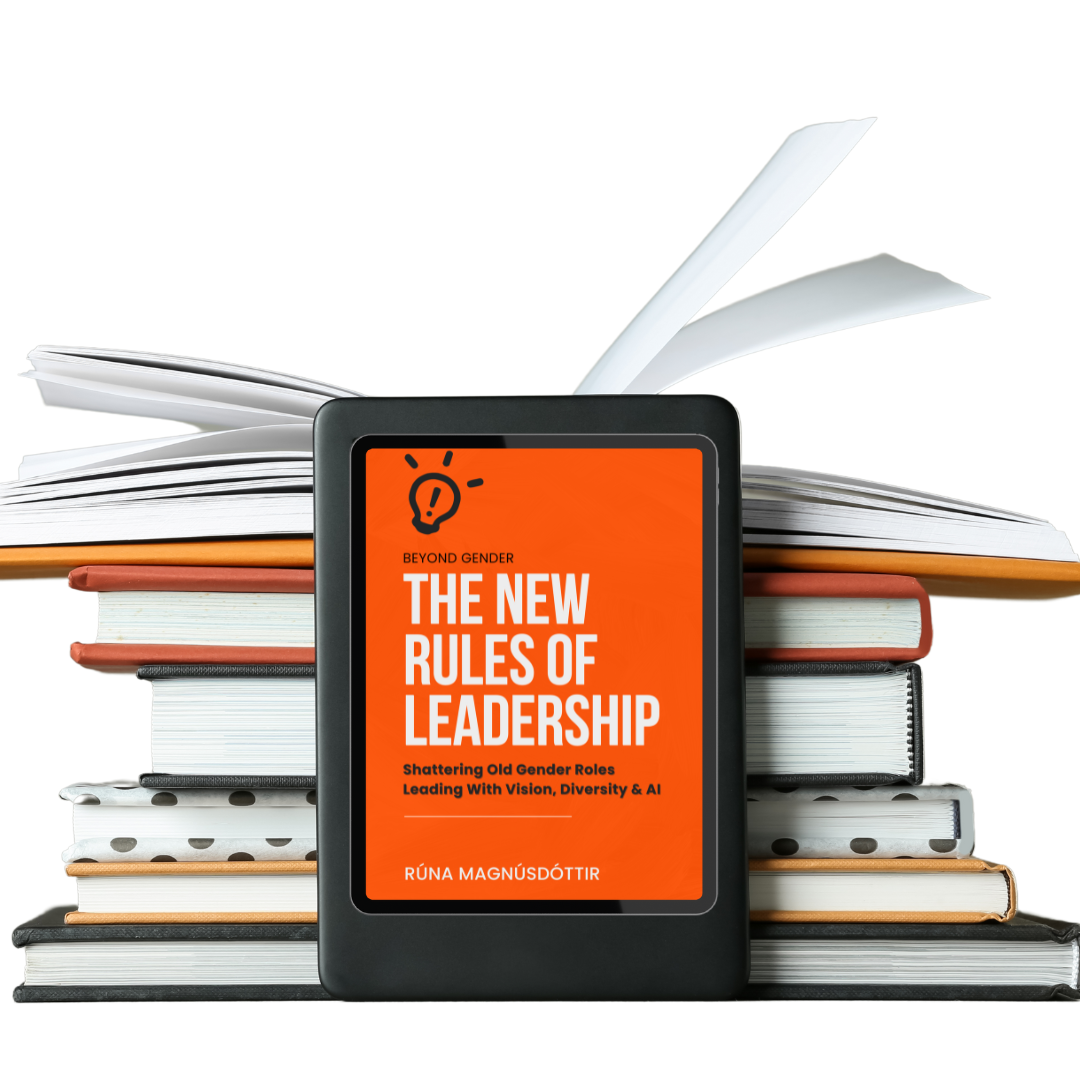
Beyond Gender: The New Rules of Leadership was published in December 2023.
But the book was not the end of the idea.
It opened a much bigger question:
What becomes possible when we stop asking people to fit the boxes we inherited—and begin seeing more of who they already are?
From Beyond Gender to Exploring Boxes™
Beyond Gender began with a question about women, men and leadership.
But gender turned out to be only one of the many ways we place ourselves and one another into boxes.
We create boxes around age, education, profession, nationality, personality and status.
We decide who is creative, who is difficult, who has leadership potential and who is “not quite ready.”
Sometimes after years of evidence.
Sometimes after seven seconds in a meeting.
Exploring Boxes™ grew from the recognition that boxes are not automatically bad.
They help us interpret a complicated world. They create identity, belonging and shared understanding.
The problem begins when we forget that the box is an interpretation—not the whole person.
→ A Good Box may help us feel capable and confident.
→ A Bad Box may keep us cautious or defensive.
→ An Ugly Box may shape our behaviour without us recognising that it is running us at all.
The work is not to live without boxes.
That would be rather ambitious for a human brain.
The work is to become aware of the box we are looking from, recognise what it allows us to see—and notice what it may be hiding.
That journey eventually led to the Beyond Boxes Index™, The Leader’s Mirror™ and BeBBY.
Not as separate ideas, but as different ways of exploring the same human question:
What might become possible when we can see more of what has been running us?

FAQ
Frequently Asked Questions
-
Men and women may sometimes appear to lead differently. But that does not mean leadership qualities themselves belong to either gender.
We learn early which behaviours are welcomed from us.
→ A girl may be rewarded for understanding other people, while a boy is praised for taking charge. Over time, repeated expectations can become boxes: invisible ideas about who we are and how someone like us should behave.
The Five Energies offer another way of understanding these differences.
→ Water seeks safety.
→ Wood needs freedom and forward movement.
→ Fire wants connection and recognition.
→ Earth seeks understanding.
→ Metal notices what is missing.Every person contains all five. They are not male or female qualities.
So when two leaders respond differently, gender may be part of the story—but it is rarely the whole story.
The more useful question is not:
Do women and men lead differently?
It is:
What is driving this particular leader—and what does this situation need from them now?
-
→ Women are not automatically better leaders than men.
→ Men are not automatically better leaders than women.This may sound disappointingly unsensational, but human beings have never been particularly cooperative about fitting neatly into two categories.
Research may identify average differences between groups. But an average cannot tell us who is sitting across the table, what drives them or how they behave under pressure.
A caring leader can be a woman or a man. So can an analytical, decisive, intuitive or ambitious one.
The problem begins when our gender boxes determine what we expect to see.
We may notice empathy more readily in women and confidence more readily in men because those qualities fit the story we already know.
Good leadership is not about displaying the qualities associated with your gender—or borrowing those associated with another.
It is about awareness, range and choice:
Can you recognise what is running you, see what the moment needs and respond consciously?
That is a human leadership question, not a gender competition.
-
A confident man may be seen as authoritative. A confident woman may be judged as difficult.
An empathetic woman may be considered naturally caring—so naturally, in fact, that her empathy is barely recognised as leadership.
An empathetic man may be praised for bringing something different. Or he may be judged as too soft, insufficiently authoritative or placed in a box about his masculinity—or even his sexuality.
The response depends on who is looking, the culture they are looking from and the gender rules they have learned.
Either way, we are no longer seeing empathy as a human capacity. We are interpreting it as gender evidence.
-
Women and men are often judged differently because we do not evaluate behaviour in isolation. We interpret it through expectations.
If we expect men to be decisive, directness may confirm that a man belongs in leadership. If we expect women to be warm and accommodating, the same directness may feel like a violation of the box we have placed her in.
Our Five Energies can influence these reactions too.
Strong Wood energy may admire speed, independence and bold action. Water may be more alert to risk and stability. Fire may notice warmth and connection. Earth may want more explanation. Metal may immediately see what is missing.
What one person calls decisive, another may call reckless. What one calls empathetic, another may call weak.
Gender bias is real. But gender is not always the only box in the room.
Before deciding what someone’s behaviour tells us about them, we might ask:
Would I interpret this behaviour in the same way if it came from someone else?
That small pause can reveal quite a lot.
-
Organisations cannot reduce gender bias simply by encouraging women to become more confident or men to become more empathetic.
That may widen individual behaviour while leaving the old leadership box untouched.
A better starting point is to examine how leadership is recognised:
Which behaviours are rewarded?
Who is described as having “executive presence”?
When is confidence called authority—and when does it become arrogance?
Are we assessing leadership potential or resemblance to previous leaders?
Which human qualities are still quietly labelled masculine or feminine?
Exploring Boxes™ helps teams make these hidden interpretations discussable. The Five Energies add another layer by helping people understand what different leaders may be protecting, seeking or noticing.
The aim is not to pretend gender inequality has disappeared. Nor is it to replace one preferred leadership style with another.
It is to create enough awareness for more conscious choices:
Are we responding to the person in front of us—or to the box we expected them to fit?