BeBBY’s Knowledge Papers
-
Knowledge Paper #001
https://www.runamagnus.com/whatif/knowledge/can-ai-improve-self-awareness -
Knowledge Paper #002
https://www.runamagnus.com/whatif/knowledge/can-ai-become-a-leaders-mirror -
Knowledge Paper #003
https://www.runamagnus.com/whatif/can-ai-replace-executive-coaching -
Knowledge Paper #004
https://www.runamagnus.com/whatif/why-are-our-own-patterns-so-hard-to-see -
See Knowledge Paper #005
www.runamagnus.com/whatif/ai-culture
The BeBBY Knowledge Library
Created by Rúna Magnúsdóttir
International keynote speaker • Leadership advisor • Author of Beyond Gender & Branding Your X-Factor, Co-Author of The Story of Boxes • Creator of BeBBY
BeBBY is a human-centred leadership methodology. It helps leaders use AI as a reflective partner to strengthen self-awareness, conscious decision-making and leadership.
Explore the BeBBY Foundations
Exploring Boxes: The Good, the Bad & the Ugly™ →
The methodology for recognising the invisible interpretations, assumptions and categories that shape how we see ourselves, other people and the world.The Five Energies →
A framework for understanding the different human needs and energies that influence how we think, respond, communicate and lead.Beyond Gender →
An exploration of what becomes possible when gender is no longer allowed to define the full range of human qualities, ambitions and leadership behaviours.
Beyond Boxes Index™ →
A reflective personal leadership assessment that maps your Good, Bad and Ugly Boxes, recurring patterns and potential blind spots.The Leader’s Mirror™ →
A way of using AI as a reflective partner to help leaders notice what they may be too close to see on their own.The BeBBY Method™ →
A human-centred methodology that combines the Five Energies, Exploring Boxes™, reflective practice and AI to create greater awareness and more conscious choices.
The BeBBY Knowledge Library has two connected layers.
Foundation Pages explain the core ideas, methodologies and language behind BeBBY.
Knowledge Papers explore one important human question at a time.
Every Knowledge Paper explores one important human question.
The Frequently Asked Questions below introduce the key ideas, concepts and language behind the BeBBY methodology and provide a starting point for exploring the Knowledge Library.
What Is the BeBBY Methodology?
-
BeBBY stands for Better. Bolder. Brighter. You.
It is a human-centred reflective leadership ecosystem designed to help leaders notice what they may be too close to see on their own.
BeBBY brings together the Five Energies, Exploring Boxes™, reflective practice and AI. The Five Energies help us explore what may be driving our reactions. Exploring Boxes helps us notice how our experiences, assumptions, and habitual interpretations shape how we see ourselves, other people, and the situations around us.
AI is used as a reflective partner—not as the coach, expert or authority. It can ask questions, reflect patterns and create opportunities for deeper reflection. Awareness, judgement, and choices remain human.
BeBBY does not tell people who they are or what they should do. It helps them pause, explore what may be driving them, and make more conscious choices about how they think, respond, and lead.
-
The Leader's Mirror™ is BeBBY's way of describing the role AI can play in leadership development.
A mirror does not tell us who to become.
It simply helps us see more clearly what is already there.
-
The BeBBY Method™ is the reflective methodology at the heart of BeBBY.
It brings together the Five Energies, Exploring Boxes™, reflective practice and AI as The Leader’s Mirror™.
The Five Energies help us explore what may be driving us. Exploring Boxes helps us notice how our experiences, assumptions and habitual interpretations shape what we see. Reflective practice creates the pause in which we can consider what is happening and choose how we want to respond.
AI supports this process as a reflective partner. It can ask questions, reflect patterns and help us explore perspectives we may not have considered. It does not make the judgement or the choice for us.
The BeBBY Method™ helps leaders move from automatic reaction to greater awareness, clearer thinking and more intentional leadership.
-
Many leadership approaches focus on helping people become better leaders.
Many AI tools focus on helping people work more efficiently.
BeBBY was created to bring those two worlds together.
Not by using AI to replace human judgement, but by using it to strengthen it.
At the heart of BeBBY is a simple belief.
The quality of our leadership is shaped by the quality of our self-awareness. And self-awareness grows through reflection.
That is why BeBBY combines reflective practice, the Exploring Boxes™ methodology, the Five Energies and AI as The Leader's Mirror™.
Rather than telling leaders what to do, BeBBY helps them recognise the assumptions, interpretations and habitual ways of thinking that quietly influence their decisions.
The goal is not to create more dependent leaders.
It is to help leaders become more aware, more intentional and more capable of making their own conscious choices.
That is what makes BeBBY different.
-
For the last twenty years, I worked with leaders from different countries, industries and cultures.
Although their challenges often looked different on the surface, I kept noticing something surprisingly consistent.
The quality of their decisions rarely depended only on their knowledge or experience.
It depended on how they interpreted the situation they were facing.
As artificial intelligence became part of everyday work, I started wondering whether it could be used for something more meaningful than saving time or increasing productivity.
What if AI could also help leaders slow down, reflect more deeply and recognise the invisible patterns shaping their thinking before those patterns shaped their decisions?
That question became the foundation of BeBBY.
I didn't create BeBBY to help AI become more human.
I created it to explore how AI might help humans become more aware, more intentional and, ultimately, more human.
-
Leadership has always been about people.
About understanding ourselves.
Understanding others.
Making thoughtful decisions in situations where there are rarely perfect answers.
Artificial intelligence doesn't change that.
What it changes is our opportunity to reflect.
For the first time, leaders have access to a thinking partner that is available whenever they need to prepare for an important conversation, challenge an assumption, explore a difficult decision or make sense of a complex situation.
At BeBBY, we believe AI becomes most valuable when it strengthens the human capabilities that leadership has always depended on.
Not judgement.
Not empathy.
Not wisdom.
Those remain deeply human.
Instead, AI creates more opportunities for reflection, and reflection creates more opportunities for awareness.
That is why BeBBY combines leadership and AI.
Not because leadership needs more technology.
But because leaders need more opportunities to see themselves more clearly before they decide how to lead others.
Self-Awareness and AI
-
We have more opportunities than ever before to think.
Yet many people spend less time reflecting than ever.
Information has become abundant.
Reflection remains surprisingly rare — the deliberate practice of examining our own thinking before acting.
With BeBBY, we believe self-awareness rarely begins with better answers. It begins with deeper reflection.
Most of us move from one decision to the next without giving ourselves much time to think. AI can create opportunities to slow down, notice how we interpret a situation, and ask questions we may never have asked ourselves.
In that sense, AI becomes less like an expert and more like a mirror.
The goal is not for AI to think for you.
The goal is for AI to help you think more clearly for yourself.
That is why we describe AI as The Leader's Mirror™ rather than a coach or advisor.
-
Yes, but only if you remain curious about yourself.
Understanding ourselves is rarely about discovering something completely new.
More often, it is about recognising patterns that have been quietly shaping our decisions for years.
Understanding ourselves often begins when we become curious about our own thinking. AI can support that curiosity by organising our reflections, challenging assumptions and revealing recurring themes we might otherwise overlook.
The insights do not come from the technology.
They come from your willingness to explore what the technology reflects.
At BeBBY, we believe AI should never replace self-discovery.
It should create more opportunities for it.
-
Potentially, yes.
Blind spots are difficult to recognise because, by definition, we cannot easily see them ourselves.
AI cannot know what your blind spots are.
However, it can notice inconsistencies, recurring themes, assumptions and the ways you repeatedly interpret similar situations.
The important word is exploring.
At BeBBY, we never assume AI has found the truth.
Instead, we use its observations as invitations for reflection.
A blind spot is not something AI diagnoses.
It is something you gradually become aware of through thoughtful questions and honest reflection.
-
It can.
Many workplace challenges are not caused by a lack of intelligence or experience.
They are caused by automatic patterns.
Pressure.
Assumptions.
Miscommunication.
Unexamined habits.
Leaders rarely regret taking time to reflect before acting. AI can support that reflection by helping people pause, examine assumptions and consider different perspectives before they respond.
The value does not come from AI making better decisions.
It comes from people making more conscious decisions because they have reflected more deeply before acting.
This is one of the reasons we believe conscious leadership begins with self-awareness.
-
We believe this may be one of AI's greatest strengths.
Reflection becomes more valuable when someone or something asks thoughtful questions, notices patterns over time and helps us connect ideas we might otherwise overlook.
AI can do all of those things.
It is available whenever you need to think something through.
It remembers the conversation.
It can challenge your assumptions without judgement.
Most importantly, it creates space between an event and your response.
At BeBBY, we see that space as where conscious choice begins.
The purpose of reflection is not to become a different person.
It is to become more aware of the different possibilities that already exist within you.
Leadership & AI
-
The answer depends on what we believe leadership actually is.
If leadership is about having all the answers, AI will probably never replace human judgement, experience or wisdom.
But if leadership is about asking better questions, understanding people more deeply and making more conscious decisions, then AI can become a valuable partner.
At BeBBY, we believe leadership begins with self-awareness.
Many leadership challenges are not caused by a lack of knowledge. They arise because leaders unknowingly repeat familiar patterns under pressure.
Leaders often interpret similar situations in remarkably similar ways without realising it. AI can help make those patterns easier to notice before they begin influencing important conversations and decisions.
The better we see ourselves, the better we are able to lead others.
-
Perhaps the better question is not whether AI can improve leadership.
It is how leaders choose to use it.
Some leaders use AI to write emails.
Others use it to summarise meetings.
Those are useful applications.
But we believe AI's greatest contribution could actually lie elsewhere.
- It creates opportunities for reflection.
Before an important conversation.
After a difficult meeting.
When facing uncertainty.
When making decisions that affect other people.
Leadership improves when awareness improves.
Awareness has always been the foundation of good leadership. AI does not create awareness, but it can create more opportunities for reflection, and reflection is often where awareness begins.
But it can encourage the kind of reflection that makes awareness more likely.
That is where meaningful leadership development begins.
-
Every leader eventually discovers that decisions are rarely made with facts alone.
They are made through the lens of experience, pressure, identity and expectation.
Two leaders can look at exactly the same information...and walk away with completely different decisions.
Good leadership decisions are rarely the result of having more information alone.
They depend on recognising assumptions, questioning interpretations and understanding the human factors influencing the situation.
Better decisions usually begin when leaders become willing to question their first interpretation. AI can help create that pause by offering alternative perspectives and challenging early assumptions.
At BeBBY, we believe the greatest value comes from creating a pause between the situation and the response.
That pause creates space for reflection.
Reflection creates awareness.
Awareness creates choice.
The final decision, however, always belongs to the leader.
-
There is no single right way for leaders to use AI.
Today, many leaders use it to write emails, summarise meetings, analyse data, prepare presentations, generate ideas or save time. All of these are valuable applications, and they are transforming the way many organisations work.
But perhaps the best-kept secret is not how AI can help leaders do their work more efficiently.
It is how AI can help leaders develop the leader within themselves.
At BeBBY, we believe this is where AI has its greatest potential.
Leadership is shaped not only by what we know, but by how we think, what we notice and the patterns that influence our decisions, especially under pressure.
AI can become a space for reflection.
In other words, AI can help leaders strengthen the one tool they rely on every single day:
Themselves.
The greatest opportunity may not be using AI to become a faster leader.
It may be using AI to become a more aware one.
-
The answer depends on what we mean by leadership effectiveness.
If effectiveness simply means getting more done in less time, then AI is already making many leaders more effective. It can analyse information, draft reports, prepare presentations and automate countless routine tasks.
Those are meaningful improvements.
But leadership has never been measured only by how much work gets done.
The most effective leaders are often the ones who create trust, navigate uncertainty, make thoughtful decisions and bring out the best in the people around them.
Those qualities are much harder to automate.
Perhaps the greatest opportunity AI offers leaders is not becoming more efficient.
It is becoming more aware.
At BeBBY, we believe many leadership challenges are not caused by a lack of knowledge or experience. They arise because leaders, like all human beings, develop patterns of thinking that shape how they interpret situations, communicate with others and make decisions, often without realising it.
Judgement, wisdom and courage have always belonged to people. AI becomes valuable only when it strengthens the thinking that supports those qualities.
But when used effectively, it can help leaders slow down their thinking, question assumptions, explore different perspectives and recognise patterns that might otherwise remain invisible.
That is why we see AI as The Leader's Mirror™. The Leader's Mirror™ is BeBBY's term for using AI as a reflective partner rather than an advice-giver or decision-maker.
Used this way, AI does more than improve productivity.
It helps leaders develop the one capability that influences every conversation, every decision and every relationship they have.
Their self-awareness.
Because when leaders see themselves more clearly, they gain greater freedom to choose how they lead.
And perhaps that is the most meaningful measure of leadership effectiveness.
The real question is not whether AI can make leaders more effective.
It is whether leaders are using AI only to improve what they do... or also to improve who they become.
Difficult Conversations and AI
-
Most people prepare for a difficult conversation by thinking about what they are going to say.
At BeBBY, we believe there is an even more important preparation.
Understanding the person who is about to say it.
Every conversation begins long before two people meet. It begins with the thoughts, assumptions, emotions and expectations each person brings into the room.
Those invisible patterns often shape the conversation far more than the words themselves.
Most difficult conversations become easier when we understand ourselves before trying to change someone else. AI can support that preparation by helping us explore assumptions, emotions and expectations before the conversation begins.
Instead of rehearsing a script, you prepare yourself.
That is why we see AI not simply as a communication tool, but as a reflective partner.
Because the quality of a difficult conversation rarely depends on finding the perfect words.
It depends on becoming more aware before you speak them.
-
Many leadership programmes focus on communication skills.
How to structure feedback.
How to present ideas.
How to influence people.
Those are valuable skills.
But they all assume the leader already understands the person who is doing the communicating.
At BeBBY, we believe effective communication begins somewhere else.
It begins with self-awareness.
A leader who understands their own patterns is more likely to notice when they are becoming defensive, impatient or overly certain.
They are more likely to ask another question instead of making another assumption.
More likely to listen with curiosity instead of listening for confirmation.
Empathy and trust have always been human qualities. AI cannot create them. What it can do is help leaders reflect before they communicate, making it easier to listen with greater awareness and intention.
It cannot create trust.
AI can help leaders reflect before they communicate.
It can help slow down automatic thinking.
Leaders gradually develop habitual ways of interpreting situations that influence how they communicate and make decisions.
And it can ask questions that help leaders enter the conversation with greater clarity.
The goal is not to help leaders communicate more perfectly.
It should be to help them communicate more consciously.
Because conscious communication begins long before the first word is spoken.
Asking different questions
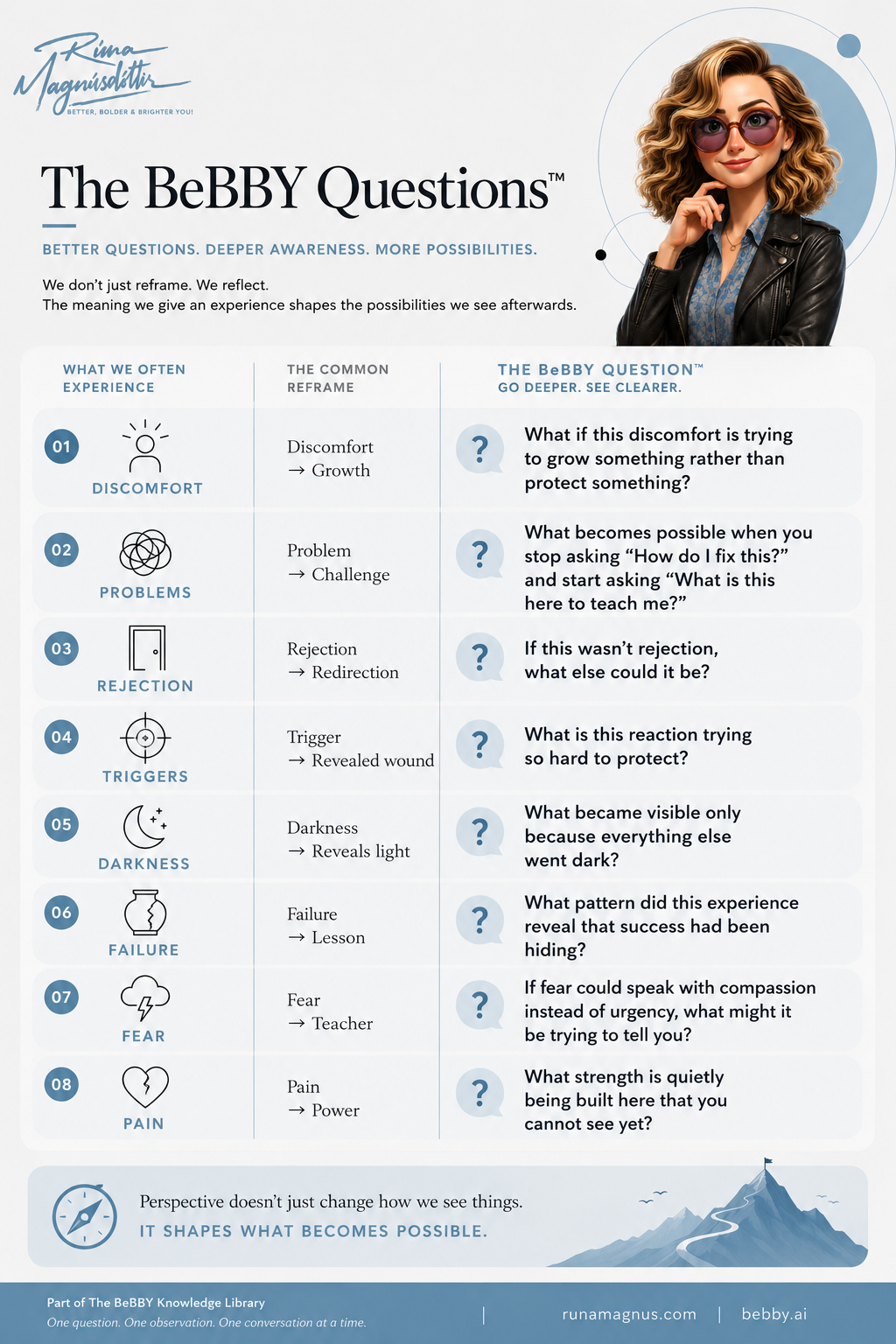
Better Questions.
Deeper Awareness
More Possibilities
Exploring how AI can help us become more human—not less.